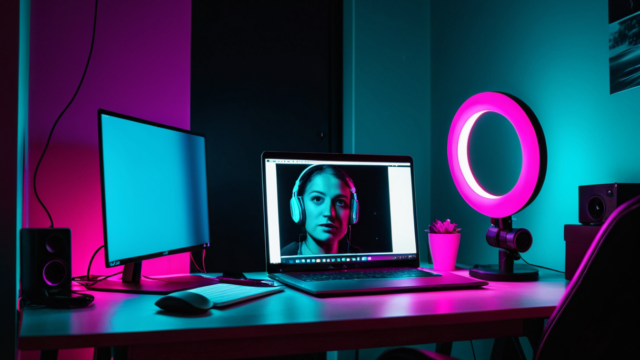
In the dynamic and often intimate world of live cam streaming, the pursuit of genuine interaction is paramount. Viewers come to platforms like CamStars seeking authentic connections and real-time experiences. However, the digital landscape, with its rapid technological advancements, also presents challenges, particularly in distinguishing genuine live streams from sophisticated deceptions. Fake webcam feeds, whether through cleverly looped videos or cutting-edge AI-generated content, can undermine the trust that is foundational to these platforms. This article aims to equip viewers with the knowledge and tools to identify such deceptive practices, focusing on the pervasive issue of looped streams and the psychological reasons they continue to be effective. By understanding the ‘how’ and ‘why’ behind these illusions, you can enhance your streaming experience and ensure your interactions are as authentic as you expect them to be.
3 Ways Streams Deceive
Understanding how deceptive streams operate is the first step in identifying them. These techniques are designed to mimic live interaction without a performer being present in real-time or to minimize a performer’s active engagement. The primary methods employed include looped video content, advanced AI simulations, and hybrid approaches that blend both.
Looped Video Feeds
This is arguably the most common and historically effective method for creating fake streams. A looped video feed involves playing a pre-recorded video segment repeatedly. The segment might be as short as a few seconds or extend to several minutes. The goal is to create a seamless playback that gives the impression of continuous, live activity. Modern looping techniques often employ subtle variations or transitions to make the loop points less noticeable. High-definition recordings, coupled with performers who exhibit a range of expressions and movements within the loop, can make these particularly challenging to detect. The effectiveness of a loop often relies on its length and the quality of the original recording. Shorter, less varied loops are easier to spot, while longer, more dynamic loops require careful observation.
AI-Generated Imagery and Performances
With the rise of artificial intelligence, particularly in areas like deepfake technology and generative adversarial networks (GANs), AI-generated streams are becoming increasingly sophisticated. These systems can create realistic-looking human figures, simulate facial expressions, body language, and even generate vocal responses in real-time. Unlike looped videos, which are static recordings, AI-generated content can theoretically respond to viewer input, albeit in a predetermined or algorithmically driven manner. This technology can range from simple animated avatars to highly realistic digital humans. The primary challenge for AI in live streaming is maintaining coherence and responsiveness that truly mimics human spontaneity, particularly in complex or unexpected interactions. While still evolving, AI-generated streams represent a frontier in deceptive content, aiming to create an interactive experience without a human performer.
Hybrid and Mixed Feeds
Some deceptive streams employ a combination of techniques. A performer might be present for a portion of a stream but then switch to a looped video or AI-generated content during periods of inactivity or when they step away. This allows performers to maximize their online presence without constant active engagement. Another hybrid approach involves using pre-recorded segments to cover certain actions or scenarios, interspersed with genuinely live interaction. For instance, a performer might broadcast live for a period, then switch to a loop during a break, and then return to live interaction. These mixed feeds can be particularly difficult to detect because they blend authentic moments with deceptive ones, blurring the lines of what is real and what is simulated.
The core principle behind all these methods is to create an illusion of live, spontaneous interaction. Whether it’s the repetition of a loop, the algorithmic predictability of AI, or the strategic deployment of pre-recorded segments, the aim is to engage viewers and maintain their attention, often without the full, real-time presence of a human performer.
Step-by-Step Guide to Spotting Fake Streams
Becoming adept at identifying fake streams requires a combination of careful observation, critical thinking, and an understanding of typical live stream dynamics. Here’s a step-by-step guide to help you discern authenticity:
Step 1: Observe Initial Engagement and Responsiveness
- Immediate Interaction Test: When you first enter a room, try sending a simple, direct message in the chat. A genuine performer will typically acknowledge new viewers and respond to messages, often within a few seconds to a minute. Look for a personalized response, not a generic welcome message that might be automated.
- Gesture or Request: If the platform allows, make a small, non-explicit request that requires a physical response, such as “Can you wave?” or “Show me your left hand.” Observe how quickly and naturally the performer responds. Delays, awkward movements, or a complete lack of response are red flags.
- Eye Contact and Attention: A live performer will often glance at the chat or directly at the camera, giving the impression of engagement. If the performer’s gaze seems fixed or never shifts to acknowledge new messages, it could be a sign of pre-recorded content.
Step 2: Analyze Environmental and Performer Details
- Background Consistency: Pay close attention to the background. Are there any subtle changes in lighting, shadows, or objects? In a genuine live stream, even minor shifts in light from windows or reflections can occur. Static backgrounds that never change, even over extended periods, can indicate a loop. Look for details like a clock that never moves, or a drink that never diminishes.
- Lighting and Shadows: As mentioned, inconsistent or unnaturally static lighting and shadows are strong indicators. Real-time lighting typically has subtle fluctuations. If the light source appears fixed and shadows never move, it’s a potential sign of a recording.
- Performer’s Appearance: Observe for subtle changes in clothing, hair, or makeup over time. While performers can be consistent, an unnaturally perfect appearance or lack of any natural shifts can be suspicious.
Step 3: Detect Repetitive Patterns
- Movement Repetition: This is one of the most reliable indicators of a looped video. Watch for specific movements, gestures, or facial expressions that repeat in an identical sequence. This might include a hand gesture, a head tilt, a smile, or even a blink pattern. The shorter the loop, the easier this is to spot. Try watching for several minutes without distraction.
- Verbal Repetition: If the performer is speaking, listen for repeated phrases, intonations, or even entire sentences that recur within a short timeframe. Automated audio responses or looped dialogue will become apparent upon close listening.
- Activity Cycles: Observe if the performer’s activity levels follow a predictable, repetitive cycle. For example, a period of high energy followed by a specific pose, then a return to high energy, repeating consistently.
Step 4: Scrutinize Audio Cues
- Background Noise: Listen for consistent background sounds. Live streams typically have natural, varied ambient noise. If the background audio is perfectly consistent, or if specific sounds repeat at exact intervals, it could be a loop. Conversely, a complete lack of natural background noise can also be suspicious.
- Audio-Visual Synchronization: Ensure the audio perfectly syncs with the performer’s mouth movements. While minor delays can occur in live streaming, significant or consistent lag between audio and visual cues can indicate a pre-recorded or manipulated feed.
- Audio Quality Shifts: Sudden, unexplained changes in audio quality, volume, or the presence of new background noises that don’t correspond to on-screen events can be a red flag, especially if they align with potential loop points.
Step 5: Utilize Platform Features (When Available)
- Private Show Requests: Many platforms like CamStars offer private show options. Requesting a private show can be an ultimate test of authenticity, as it typically requires dedicated, real-time interaction that is difficult to fake with a loop or basic AI.
- Tip Reactions: Observe how a performer reacts to tips. Genuine performers often acknowledge tips directly and spontaneously. Generic or delayed responses, or a lack of any acknowledgment, can be suspicious.
- Chat History Review: If you’ve been in the room before, review the chat history. Note if previous interactions or questions were addressed or ignored. A performer consistently ignoring chat is a significant red flag.
By systematically applying these observational techniques, you can significantly improve your ability to distinguish between genuine live performances and deceptive streams. Trust your instincts; if something feels off, it very well might be.
Common Mistakes Viewers Make
Even with a keen eye, viewers can fall prey to deceptive streams due to certain common errors in judgment or observation. Awareness of these pitfalls can further enhance your ability to spot fakes.
Mistake 1: Short Attention Spans and Quick Judgments
Many viewers spend only a minute or two in a room before deciding if they want to stay or move on. This brevity plays directly into the hands of those using looped videos. A loop designed to be 30 seconds to a few minutes long can easily appear live during a brief viewing. The most common mistake is not observing the stream for a sufficient duration to detect repetitions. To counteract this, commit to watching a stream for at least 5-10 minutes, actively looking for the signs mentioned in the step-by-step guide.
Mistake 2: Over-Reliance on Initial Impressions
The first few moments of a stream are often carefully crafted to be engaging. Performers (or the creators of loops) understand the importance of a strong opening. Viewers might be swayed by an immediate visual appeal or a seemingly active scene and conclude it’s live without further scrutiny. It’s crucial to move beyond the initial impression and apply a critical lens, regardless of how captivating the stream appears at first glance.
Mistake 3: Attributing Delays to Technical Issues
Live streaming technology can sometimes experience minor delays or glitches. Viewers might mistakenly attribute a performer’s lack of responsiveness or a slight audio-visual desynchronization to “lag” or “internet issues.” While these can be real factors, consistent or prolonged delays in interaction, or a complete absence of acknowledgment, are far more likely to indicate a non-live stream. Don’t be too quick to excuse inconsistencies as technical problems; consider them potential red flags.
Mistake 4: Ignoring Subtle Environmental Cues
It’s easy to focus solely on the performer and overlook the details of their environment. However, subtle cues in the background—such as static shadows, unchanging item placement, or a clock that doesn’t advance—are often the easiest tells for a looped video. Many viewers miss these details because their attention is primarily on the central figure. Train yourself to periodically scan the entire frame for any inconsistencies.
Mistake 5: Believing All AI-Generated Content is Easily Identifiable
While early AI-generated imagery might have been crude, current technology is advancing rapidly. Some viewers might assume that any AI-generated content will look obviously artificial. However, sophisticated AI can produce highly realistic faces and movements. The tell-tale signs for AI are often in the subtle imperfections or unnatural smoothness of motion, the lack of genuine emotional depth, or predictable, non-spontaneous responses rather than overt artificiality. Don’t dismiss a stream as live just because the performer looks “real” – look for the naturalness of their interaction and environment.
Mistake 6: Not Utilizing Platform-Specific Features
Many live cam platforms offer features designed to enhance interaction and confirm authenticity, such as private shows or specific tipping reactions. Neglecting to use these features, especially when suspicion arises, means missing out on powerful tools for verification. If a performer consistently avoids private show requests or offers only generic, non-specific acknowledgments for tips, it warrants further investigation.
By being aware of these common mistakes, viewers can refine their detection skills and become more astute judges of authenticity in the live cam environment.
2 Dangers to Viewers
Beyond the immediate disappointment of encountering a fake stream, there are significant practical implications for viewers, particularly concerning privacy and financial expenditure. Understanding these caveats is crucial for a safe and enjoyable streaming experience.
The Privacy Aspect
- Data Security: When interacting with a fake stream, especially one employing AI or sophisticated pre-recorded content, you are essentially engaging with a non-human entity or a system designed to simulate interaction. While direct privacy breaches might seem less likely with a loop, the underlying platform or creator of the fake stream could still be collecting data on your viewing habits, chat messages, and spending patterns. Always ensure you are on a reputable platform like CamStars that prioritizes user data protection, regardless of the individual stream’s authenticity.
- Misplaced Intimacy: The core appeal of live camming is often the sense of genuine, one-on-one interaction. When this interaction is with a loop or an AI, the intimacy is an illusion. Sharing personal details or expressing vulnerabilities to a non-human entity can feel like a profound breach of trust once discovered, even if no direct data is stolen. It can lead to feelings of being exploited or manipulated.
- Risk of Identity Theft/Phishing: While less directly related to the fake stream itself, deceptive streams can sometimes be part of broader phishing or scam operations. If a fake stream directs you to an external site or requests personal information outside the secure platform, it’s a significant red flag that could lead to identity theft or financial fraud. Always adhere to the platform’s guidelines and never share sensitive personal details.
The Financial Aspect
- Wasted Expenditure: The most immediate and tangible consequence of engaging with a fake stream is the financial loss. Viewers typically spend virtual currency (tokens, credits, etc.) to tip performers, request actions, or initiate private shows. When these funds are spent on a pre-recorded loop or an AI that cannot genuinely respond, that money is effectively wasted. You are paying for an experience that isn’t real, and the value proposition is entirely undermined.
- Platform Integrity: For legitimate platforms, fake streams pose a threat to their business model and reputation. They rely on the authenticity of their performers to attract and retain viewers. Platforms like CamStars typically have policies against deceptive content and mechanisms for reporting it, as it directly impacts viewer trust and satisfaction.
- Difficulty in Refunds: Recovering funds spent on a fake stream can be challenging. While reputable platforms may offer some recourse if a clear case of deception is proven, it’s often easier to prevent the loss in the first place. The burden of proof can fall on the viewer, and platform policies vary.
Practical Caveats and Best Practices
- Report Suspicious Activity: If you strongly suspect a stream is fake, utilize the reporting features available on the platform. Providing clear reasons and evidence (e.g., specific time stamps where repetitions occur) can help platform moderators investigate and take action. This protects other viewers and helps maintain the integrity of the platform.
- Start Small with Spending: When entering a new room or interacting with an unfamiliar performer, begin with minimal spending. Observe their responsiveness and authenticity before committing significant funds. This “test the waters” approach can save you money if the stream turns out to be fake.
- Trust Your Gut: If something feels off, it probably is. The human brain is remarkably adept at picking up subtle inconsistencies. Don’t dismiss your intuition. If a stream seems too perfect, too repetitive, or too unresponsive, proceed with caution.
- Educate Yourself: Continuously learning about the latest deceptive techniques, as outlined in this article, will make you a more informed and protected viewer.
By being mindful of these privacy, financial, and practical considerations, viewers can navigate the live cam environment more safely and ensure their pursuit of authentic interaction is not compromised by deceptive practices.
Spotting 4 Fake Streams
Navigating the live cam streaming landscape, while exciting and engaging, requires a discerning eye. The presence of fake streams, primarily through looped videos and increasingly sophisticated AI, presents a challenge to the authenticity viewers seek. However, by arming yourself with knowledge and employing systematic observation techniques, you can significantly enhance your ability to identify and avoid deceptive content.
Here are the essential points to remember:
- Understand the Methods: Be aware that fake streams primarily use looped pre-recorded videos, AI-generated content, or a hybrid of both to create an illusion of live interaction. Each method aims to mimic spontaneity without genuine real-time presence.
- Prioritize Responsiveness: The most immediate indicator of a live stream is the performer’s genuine, personalized, and timely response to chat messages, requests, and tips. A lack of direct engagement, or generic, delayed reactions, are significant red flags.
- Detect Repetition: Looped videos are often betrayed by repetitive movements, gestures, facial expressions, or audio patterns. Observe the stream for a sustained period (typically 5-10 minutes) to catch these cycles.
- Scrutinize Environmental Details: Don’t just focus on the performer. Pay close attention to background lighting, shadows, and objects for any unnatural static quality or inconsistencies. A clock that doesn’t move or unchanging shadows are strong indicators of a recording.
- Listen Carefully to Audio: Inconsistent background noise, perfectly repeating sounds, or a lack of natural ambient audio can signal a non-live stream. Ensure audio-visual synchronization is natural and consistent.
- Avoid Common Mistakes: Guard against short attention spans, over-reliance on initial impressions, and attributing all delays to technical issues. These errors make you more susceptible to deception.
- Protect Your Resources: Understand that engaging with fake streams wastes your money and can undermine the trust and intimacy you seek. Use platform features like private show requests as verification tools.
- Report Suspicious Activity: Be an active participant in maintaining platform integrity. If you suspect a fake stream, report it with clear details to help protect the community.
- Trust Your Instincts: If a stream feels “off” or too perfect, there’s a good chance your intuition is correct.
By integrating these practices into your viewing habits, you can enjoy a more authentic, secure, and rewarding experience on platforms like CamStars, confident that your interactions are with genuine performers who value real connection.